
Ireland should be at the centre of the next chapter in relations between the EU and UK
Ireland is uniquely placed to help shape a closer, more practical EU–UK relationship. The upcoming summit offers an opportunity to reduce trade barriers, deepen cooperation and safeguard peace and prosperity.
The forthcoming EU and UK Summit in Brussels comes at an important moment for the relationship between two close neighbours whose economic, political and security interests remain deeply connected.
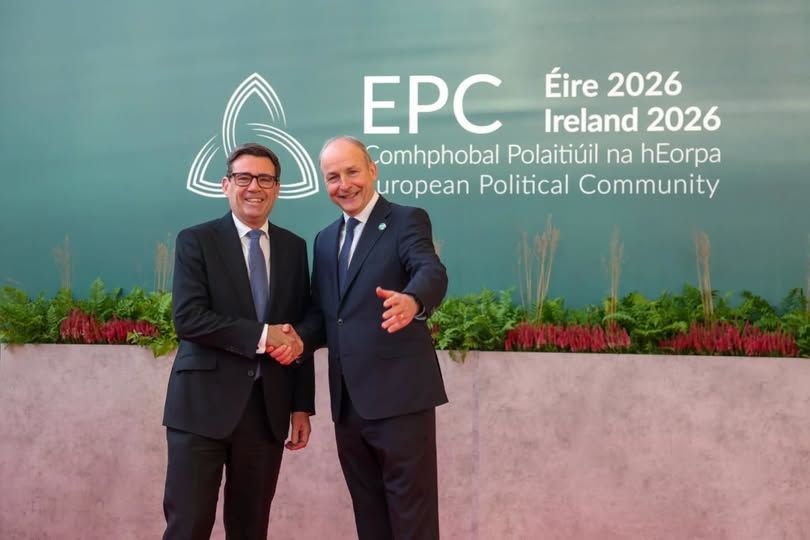
The arrival of Andy Burnham as British Prime Minister, and his willingness to speak candidly about the consequences of Brexit, have created an opportunity to reset that relationship. His acknowledgement that the existing arrangements have damaged the British economy is not insignificant. There is a growing recognition that the current level of cooperation carries costs for businesses, consumers and communities on both sides.
The economic evidence is impossible to ignore. Research led by economists at Stanford University, King’s College London and the Bank of England estimates that, by the end of 2025, Brexit had left UK GDP between 6 and 8 per cent lower than it would otherwise have been. The same research estimates a substantial impact on investment, employment and productivity. These are estimates against a modelled alternative, rather than a measure of the economy’s absolute decline, but they illustrate the cumulative cost of a decade of uncertainty and additional barriers to trade.
The consequences have been tangible for Ireland too. The UK remains a major trading partner, while the movement of goods, services and people across these islands is fundamental to our economic and social relationships.
There is also a wider strategic consideration. Ireland has a distinctive position within the European Union. Our membership, our shared language, the Common Travel Area and the depth of our historical, family, cultural and commercial connections with Britain give us a perspective few other member states can offer.
That position brings responsibility and opportunity.
Ireland has an interest in a strong and constructive relationship between Britain and its European neighbours. We also have an interest in a stable and prosperous United Kingdom, in the effective operation of the Good Friday Agreement and in maintaining the progress achieved through the peace process. These interests are closely connected.
There are encouraging signs that the Government understands the opportunity. In a recent article in The Irish Times, Stephen Collins observed that Ireland is using its European Presidency to help Andy Burnham bring the UK closer to the EU. The invitation extended to British ministers to participate in informal meetings of the Council of Ministers during the Presidency is a practical example of that approach. It has provided an opportunity for British representatives to engage with their European counterparts and rebuild familiarity and trust.
At a British Irish Chamber of Commerce event at Dublin City Hall in September, entitled Reducing Friction: Addressing UK and EU Trade Barriers and earlier in the year, Minister of State Thomas Byrne emphasised the importance of strengthening the partnership, reducing barriers to cooperation across these islands and delivering practical benefits for citizens and businesses. He also highlighted the potential for progress on food and agricultural trade, emissions trading and a youth experience scheme.
These are precisely the areas where practical progress can make a difference. Improved arrangements for agrifood trade could reduce costs and administrative burdens. Cooperation on energy and climate could support shared infrastructure and more efficient markets. Greater opportunities for young people to study, work and gain experience across the UK and EU would help restore some of the connections weakened over the past decade. Defence, security, research and law enforcement also offer important opportunities for closer cooperation.
Judging the Summit on the progress it delivers
The forthcoming Summit should be judged by the practical progress it delivers. There are political and institutional limits to what can be agreed in the immediate term. The British Government has ruled out a return to the Single Market, Customs Union or free movement during this parliamentary term. The immediate task is therefore to identify the closest practical relationship that can command support on both sides, while respecting the integrity of the Single Market and the obligations that come with EU membership.
Ireland should be an active voice in shaping that agenda. Our role during the Presidency has demonstrated the value of engagement and the access that comes with our position. That influence should be sustained after the Presidency concludes, particularly in areas like agri trade and energy. Government should continue to encourage dialogue, build relationships and make the case within the European institutions for ambitious and workable cooperation with Britain.
There is a clear commercial dimension too. Ireland is an established and trusted member of the European Union, with deep connections to the British market. That combination creates opportunities for investment, partnerships and trade. British companies seeking to develop their presence within the EU can find in Ireland an experienced business environment, strong international connections and access to the European market. Irish businesses, in turn, benefit from a more constructive and predictable relationship with one of their most important trading partners.
The Good Friday Agreement and the Windsor Framework must remain central to this work. The political and economic stability achieved on this island is of immense value. A closer relationship between the EU and UK can support that stability and help ensure that the arrangements governing trade and cooperation operate effectively for communities and businesses across the island.
Ireland has spent much of the past decade managing the consequences of Brexit. We should now be equally determined to help shape what comes next. Our national interest, our European responsibilities and our relationship with Britain all point in the same direction.
Ireland should champion the closest practical relationship possible between the European Union and the United Kingdom. The forthcoming Summit provides an opportunity to advance that ambition, and Ireland should be ready to help lead it.
By Alan Farrell, Senior Adviser and Executive Director, LGI