
Budget 2026: five things businesses need to know
Today's budget was the Chancellor's first opportunity to set out his - and the Prime Minister's - financial blueprints in detail. Billed towards tackling the cost of living and demonstrating fiscal discipline, there are key takeaways for businesses to consider.
 Insight
 Strategic Communications
 Public Affairs
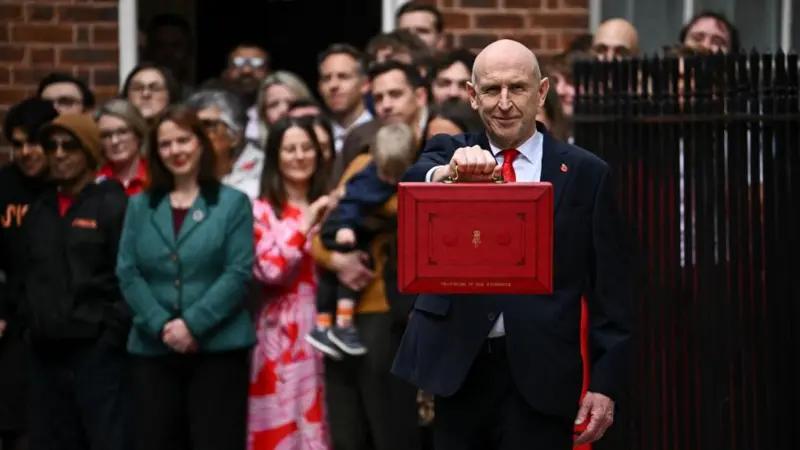
This afternoon, John Healey delivered his first budget as Chancellor of the Exchequer. Describing it as a “budget for working Britain” that delivers breathing space on the cost of living and the cost of business, the Chancellor sought to demonstrate a change of approach while maintaining Labour’s commitment to fiscal discipline.
With Labour hitting 30% in the polls, Westminster increasingly focused on the Government's economic and political strategy, and a new 10 Year Plan set to be published by the Prime Minister later this year, today’s Budget was always likely to be a case of ‘steady as you go’.
But for businesses, it provided a useful reminder of the importance of making a political case for action alongside an economic one.
The focus on high streets, energy affordability and strategic industries suggests ministers are looking for interventions with benefits they can demonstrate to voters. But the Budget also exposes the difficulty of supporting some businesses while increasing costs for others, raising questions about how consistently the Government’s ambitions for growth and thriving high streets are being applied.
With limited fiscal room, businesses must show what their proposals would deliver for the public, backed by clear commitments on prices, jobs or investment, giving ministers a credible case to champion across government.
Here are the five announcements that we think particularly underscore this strategic direction from government.
1. Energy affordability is a central economic test
The Chancellor confirmed the British Industrial Competitiveness Scheme will cut electricity bills by 25% for 10,000 eligible firms from April, alongside backdated support for this year’s costs.
Meanwhile, the approval of Jackdaw shows a more pragmatic approach to approvals on oil and gas, with energy security and revenue generation more important drivers of policy than recent times.
2. High street support comes with a sting for some businesses
Beyond energy, the Budget includes measures designed to ease pressures on the high street. From April 2027, the threshold for 100% Small Business Rate Relief will increase for qualifying retail, hospitality and leisure properties, alongside a two-year real-terms freeze on business rates bills.
These measures will provide welcome relief for many businesses, but the benefits are not universal. Some high street sectors remain excluded from the support, while others face additional costs through tax changes that help fund the package. The result is a mixed picture for Britain’s high streets, with measures designed to support some businesses potentially undermining the Government’s wider ambitions for growth, jobs and local economic renewal.
3. Entrepreneurs are being backed to scale and stay in Britain
To address a growing challenge of businesses leaving the UK to scale, taking valuable tax revenues and jobs with them, the Chancellor announced several policies to back British entrepreneurs.
A founder’s relief will provide a 10% capital gains tax rate for founders of high-growth companies, reforms to skilled worker visas and non-compete clauses will aim to boost the labour market, and a new Export Finance Guarantee with the British Business Bank will widen access to finance for Small and Medium-sized Enterprises (SMEs).
4. The government is investing in sovereignty, from AI to Defence
British jobs and investment were a key theme. Challenge-led procurement, a new definition of “UK supplier” and further investment in innovation clusters, life sciences, and AI all point towards a more interventionist industrial strategy.
The National Wealth Fund and British Business Bank will receive an additional £20.4 billion, with £5 billion of that funding going to defence, national security and sovereign capability. Alongside this, the Government has committed £15 billion to fully fund the Defence Investment Plan, taken from budgets and reprioritisation across Whitehall. This creates material pressure on capital projects, particularly those dependent on government funding, grants or co-investment.
5. Devolution changes where growth policy will be made
One of the most significant changes is the Fiscal Devolution Roadmap which will give mayors a 20% share of locally retained business rates from April 2027. Mayors will also receive an assigned share of income tax from 2028.
For places like London, the West Midlands and Greater Manchester, this is a change to their revenue streams. For business, this creates a more complex policy landscape. Investment decisions will increasingly involve not only Westminster, but mayors, combined authorities and strategic local bodies.
What businesses need to know
Taken together, the Budget offers targeted breathing space rather than a wholesale change in the business environment. It lowers costs in selected areas, backs entrepreneurs and strategic sectors, and gives local leaders a greater role in shaping growth.
The harder choices have been deferred to the ten-year plan and 2027 Spending Review. With capital budgets under pressure, the Government will need to decide which projects receive funding, how procurement rewards British value and how devolved powers work in practice.
For businesses, the important question now is how these priorities will be translated into eligibility rules, procurement decisions, regulation and investment over the coming months and years. It is more important than ever to demonstrate the value your business delivers to the UK.
Businesses affected by the Budget should engage now with key stakeholders across Westminster, Whitehall, and devolved government, bringing evidence on jobs, investment, affordability and practical delivery.
If your business is looking to engage, please do get in touch with the team at Fenton Fitzwilliam on info@fentonfitzwilliam.com.
By Gary Follis, senior adviser at Fenton Fitzwilliam